

NFL rookie rankings
The all-time rookie team
The best statistical rookie seasons in NFL history, position by position: a first team, a second team and honorable mentions. Plus the two 2026 rookies playing their way onto the list.
NFL rookie rankings
The best statistical rookie seasons in NFL history, position by position: a first team, a second team and honorable mentions. Plus the two 2026 rookies playing their way onto the list.
NBA salary cap
Why the league drew two spending lines above the luxury tax, where all 30 teams landed, and the real trades and signings each rule has shaped. Every section can also explain it like you’re 5.
NBA player rankings
Three top-100 lists blended into one, from Shai Gilgeous-Alexander at No. 1 to Zach LaVine at No. 100. Then build your own top 10 and share it.
NFL franchise values
All 32 teams, ranked by what they’re worth today, with every sale and owner along the way, from the $17 billion Dallas Cowboys to the $8 billion Cincinnati Bengals.
NFL franchise values
Each line runs from a franchise’s first recorded price up to its 2026 Forbes value, with a dot for every sale or entry fee along the way. Teams are ranked left to right, from the $17 billion Dallas Cowboys to the $8 billion Cincinnati Bengals.
Swipe sideways to see all 32 teams.
Hover over or tap a team to see its sales; each dot gives the buyer, the price and the price in 2026 dollars. Click a team to pin it, or use the arrow keys.
NBA player rankings
Three of the big top-100 lists, blended into one consensus ranking. Tap any player to see his last season and what’s ahead, then build your own top 10 and share it.
No players match.
* How the score works: each list gives 100 points for No. 1, 99 for No. 2 and so on down to 1 for No. 100, and 0 to anyone it left out. A player’s score is his average across the lists. The Ringer’s list is its final 2025-26 edition, so it couldn’t include this year’s rookies or players who missed last season or were ruled out for it (marked n/a); they’re scored on ESPN and 2K alone. Ties go to the player with the better single ranking. Cell colors compare each list’s rank with Howie’s 100.
Sources: The Ringer, Top 100 Players in the NBA (final 2025-26 edition, updated June 16, 2026); ESPN, NBA Rank 2026 (100–51, 50–11, top 10, Sept. 22–24, 2026); NBA 2K27, Top 100 Player Ratings (as of Oct. 1, 2026). Teams are as of Oct. 1. Player notes draw on ESPN’s write-ups and news reports; projections are ESPN’s.
Table: For the Schwab
Pick players from Howie’s 100 to fill the spots. Tap an empty spot to choose where the next pick goes, and drag or use the arrows to reorder. When all 10 are in, confirm to make a share image.
NBA salary cap
The NBA draws two spending lines above the luxury tax. Here’s why they exist, where every team landed, and the real trades and signings each rule has shaped.
Every section also has its own switch.
Why they exist
The NBA’s salary cap is soft. Teams can go over it to re-sign their own players and to add others through exceptions, so for most of the league’s history the only brake on spending was the luxury tax: a bill on every dollar a team spends past a line well above the cap, with half the money split among the teams that stay under it.
For the richest owners, the tax was a price, not a limit. Golden State’s bill for 2021-22 came to about $346 million: roughly $176 million in salaries plus more than $170 million in tax. It won the title anyway.
So the league added rules that money can’t buy around. The 2011 labor deal drew a line $4 million above the tax, called the apron. Teams over it got only a smaller, $3 million mid-level exception and couldn’t take in a player through a sign-and-trade. The 2023 deal, which runs through 2029-30, split that line in two. The first apron started $7 million above the tax and takes away some tools. The second started $17.5 million above it and takes away most of the rest, and eventually draft picks too. Both lines rise with the cap every year.
The league’s case is competitive balance. “The purpose of the system is ultimately to create competition throughout the league,” commissioner Adam Silver has said. Since 2019, eight different teams have won the eight titles.
Every team has a budget for paying its players. It’s called the salary cap. But it’s a squishy budget: teams are allowed to go over it to keep their own players.
Go way over, and you pay a fine called the luxury tax. Half of that money goes to the teams that didn’t overspend. But a few owners are so rich they just paid the fine and kept spending. One season, the Warriors spent about $346 million on players and fines, and they won the championship.
So the NBA drew two more lines past the fine line. They’re called aprons. Cross the first one and you lose some of your favorite ways to get new players. Cross the second one and you lose almost all of them. You can even lose a future draft pick.
The NBA says this keeps things fair, so a team can’t win just because its owner has the most money. Eight different teams have won the last eight championships.
To scale, in millions of dollars
The two lines
Both aprons are measured against a team’s payroll, and they bite in two ways. A team over a line loses tools. And a team that uses certain tools gets a hard cap at that line: for the rest of the season it can’t go over it, no matter what.
Both lines measure how much a team pays its players. Go past a line and you lose some tricks. Use certain tricks and that line turns into a wall: you can’t go past it for the rest of the season.
2026-27 · it was $195.9 million in 2025-26
Above it, a team can’t:Past it, a team can’t:
The hard cap: use the full mid-level, the bi-annual, a sign-and-trade or one of those trade options, and the first apron becomes a ceiling for the whole season.The wall: use any of those tricks, and the first apron becomes a wall the team can’t pass all season.
2026-27 · it was $207.8 million in 2025-26
Everything above, plus a team over it can’t:All of that, and past it a team also can’t:
The hard cap: use the taxpayer mid-level, send out cash, combine salaries in a trade or use a trade exception from a sign-and-trade, and the second apron becomes a ceiling for the season.The wall: use any of those tricks, and the second apron becomes a wall the team can’t pass all season.
Each team’s final apron payroll against last season’s lines. The black tick is the line each team was hard-capped at. Tap or hover a team to see the moves that set it.
Each dot is a team, placed by how much it paid its players last season. The black tick is that team’s wall. Tap a team to see which tricks built its wall.
Source: Sports Business Classroom’s apron tracker (Yossi Gozlan), saved Oct. 16, 2026. The page is titled for 2026-27, but its figures are measured against the 2025-26 lines and its moves are from last season, so it shows how 2025-26 ended. It lists Utah at $172,442,670 but also $15,452,330 under the first apron, which would mean $180,492,670; the chart uses the payroll figure.These numbers are from the end of last season. Teams are still making moves for this season.
The lines rose 6.7% with the cap this summer. These moves from the offseason, as reported, already set this season’s limits. It’s not a full list.
This season has new, higher lines. Here are some teams that already ran into them.
In real moves
Over the first apron, a team gets only the taxpayer mid-level, $6.1 million this season, instead of the full $15.0 million. And a team that uses the full one can’t go over the first apron for the rest of the season.Teams past the first apron get a small coupon for free agents instead of the big one. Use the big one, and the first apron becomes your wall.
Philadelphia agreed to sign Dean Wade for four years and $39 million, using part of the full mid-level. That made the first apron a hard cap for the 76ers’ whole season, with the rest of the mid-level, the bi-annual exception and minimum contracts left to fill the roster.
The 76ers used their big coupon to sign Dean Wade. Now they can’t spend past the first apron this season, no matter what.
Sources: PhillyVoice, NBC Sports Philadelphia
The bi-annual exception, worth $5.5 million, is off-limits above the first apron, and using it hard-caps a team at the first apron.There’s a small coupon teams can use every other year. Teams past the first apron can’t use it, and using it turns the first apron into a wall.
De’Anthony Melton’s two-year deal was first expected to use the bi-annual exception, which would have capped the Warriors at the first apron ($209.0 million). It ended up using the taxpayer mid-level instead ($6.1 million this season), so their ceiling is the second apron ($221.7 million), about $5.2 million above their payroll.
The Warriors had two coupons that could pay Melton. One would have made the first apron their wall. They used the other one, so their wall is the higher second apron instead.
Sources: Hoops Rumors via Yardbarker, EssentiallySports
Over the first apron, a team can’t take back more salary than it sends out in a trade. A team under it can take back up to 125% on big trades, but doing so hard-caps it at the first apron.Past the first apron, you can’t trade for a player who costs more than the one you give up. Teams below it can, but then the first apron becomes their wall.
Toronto sent the Clippers Brandon Ingram, Gradey Dick and picks, $47.1 million in salary, for Kawhi Leonard’s $50.3 million. Taking back more than it sent out made the first apron the Raptors’ hard cap, and Leonard waived his trade kicker, about $7.45 million, so they would fit under it with about $1 million to spare.
The Raptors got a player who costs more than the two players they sent away. That’s allowed, but now they can’t go past the first apron. Kawhi even gave up a bonus so the team would fit.
Sources: Sports Illustrated, Third Apron
A team can’t take in a player through a sign-and-trade if it would end up over the first apron, and any team that takes one in is hard-capped there. Over the second apron, a team can’t even use the trade exception it gets from sending a player out that way.Sometimes a team signs a player and trades him away right after. The team that gets him can’t end up past the first apron.
Minnesota sent Nickeil Alexander-Walker to the Hawks in a sign-and-trade on a four-year, $62 million deal, so Atlanta played 2025-26 hard-capped at the first apron. He went on to win Most Improved Player.
The Timberwolves signed Nickeil Alexander-Walker and traded him to the Hawks in the same deal. Getting him that way meant the Hawks couldn’t spend past the first apron all season. He turned out to be the league’s most improved player.
Sources: CBS Sports, AP via WTOP, Sports Business Classroom’s apron tracker
A team over the first apron can’t sign a player waived during the season if he had been earning more than the full mid-level.When a team lets an expensive player go in the middle of the season, teams past the first apron aren’t allowed to grab him.
When Brooklyn bought out Ben Simmons, his $40.3 million salary was far above the full mid-level that season ($12.8 million). That ruled out every team over the first apron, including the Celtics, Lakers, Nuggets, Timberwolves, Bucks, Knicks and Suns. He signed with the Clippers.
Ben Simmons was free to join a new team, but teams past the first apron weren’t allowed to sign him. Contenders like the Celtics and Lakers were out, so he picked the Clippers.
Sources: ESPN via ABC7, Basketball Australia
Over the second apron, a team can’t bundle two or more contracts to match one bigger salary, and it still can’t take back more than it sends out.Past the second apron, you can’t trade two cheaper players for one expensive one.
Phoenix chased Jimmy Butler before the 2025 deadline. As a second-apron team it couldn’t combine smaller contracts to match his $48.8 million, so any deal had to be built around Bradley Beal’s, and it never came together. Golden State, under the second apron, could combine them: it sent out Andrew Wiggins, Dennis Schröder, Kyle Anderson and Lindy Waters III in a five-team trade and got him.
The Suns wanted Jimmy Butler, but they weren’t allowed to trade a bunch of players for him. The Warriors were allowed, so they traded four players and got him.
Sources: Hoops Rumors, ESPN via ABC7
With no bundling allowed and no extra salary coming back, a second-apron team’s trades shrink to swaps where it takes back a little less than it sends.A team past the second apron can basically only swap one player for another player who costs the same or less.
Cleveland, over the second apron, traded Darius Garland ($39,446,090) for James Harden ($39,182,693). Harden’s trade bonus came to just $263,397, the exact gap between the two salaries, so the money coming in matched the money going out to the dollar.
The Cavaliers traded one star for another who costs a tiny bit less. Even Harden’s trade bonus was cut down so the numbers matched exactly.
Sources: Hoops Rumors, AP via Fox Sports
A team over the second apron can’t send cash in a trade, and a team that does is hard-capped at the second apron.Teams sometimes pay money to get a deal done. Doing that makes the second apron a wall.
To draft Koa Peat at No. 30, Phoenix sent the No. 47 pick, two future second-rounders and cash to Dallas in a four-team trade. The cash made the second apron the Suns’ hard cap for all of 2026-27.
The Suns paid money as part of a trade to pick Koa Peat. Now they can’t spend past the second apron all season.
Sources: Arizona Sports, Roundtable
Finish a season over the second apron and the team’s first-round pick seven drafts out is frozen: it can’t be traded. Stay under the line in three of the next four seasons and it thaws. If not, it moves to No. 30.Overspend too much and one of your future draft picks gets locked in a box. Keep doing it and it becomes the last pick of the first round.
The Suns and Celtics both finished 2024-25 over the second apron, so their 2032 first-round picks were frozen. Phoenix couldn’t offer its 2032 first in trades, and Boston’s was taken off the table the same way.
The Suns and Celtics spent too much in 2024-25, so their 2032 first-round picks got locked up. They can’t trade them.
Sources: Sports Illustrated, NBC Sports Boston
The penalties add up fast enough that contenders trade good players just to get back under the second apron.The second apron is so tough that good teams trade away good players just to get back under it.
A year after winning the 2024 title, Boston traded Jrue Holiday to Portland for Anfernee Simons and sent Kristaps Porziņģis to Atlanta, getting back Georges Niang. The two deals got the Celtics under the second apron and, by ESPN’s Bobby Marks’ estimate, saved them about $180 million in luxury tax.
The Celtics traded two of their best players so they’d spend less and get back under the second apron.
Sources: NESN, Boston Globe
Some teams won’t cross the line at all, even when it means losing players from a winning roster.Some teams are so scared of the second apron that they let good players go instead of crossing it.
Four days after the Knicks won the 2026 title, owner James Dolan said: “There’s certain things in the NBA that you have to be suicidal to do, and we’re not gonna do those. One of them is called the second apron.” Paying Mitchell Robinson what Boston offered, three years and $47.4 million, would have pushed New York past it, so he left. In Oklahoma City, the 2025 champions traded Isaiah Joe, Aaron Wiggins and Lu Dort for second-round picks to stay under the line.
Even champions are scared of the second apron. The Knicks let one of their players leave, and the Thunder traded three players away, so they wouldn’t cross it.
Sources: theScore, ESPN via ABC7, Bleacher Report, News 9, AP
Sources: 2026-27 lines and exceptions: NBA and Hoops Rumors. Team payrolls and hard caps for 2025-26: Sports Business Classroom. Apron rules: Hoops Rumors and the tracker. Warriors spending: InsideHook. Silver quote: CBS Sports. 2011 apron: Hoops Rumors.
Story: For the Schwab
Halfway through 2026, Jets edge rusher David Bailey and Giants linebacker Arvell Reese are playing like rookies who belong in the record books. So we went to the record books. These are the best statistical rookie seasons in NFL history, position by position: a first team, a second team, a few honorable mentions and no fullbacks.
Updated Nov. 11, 2026
Two rookies from this year’s class who are playing their way toward this list. Their seasons aren’t finished, so they aren’t on it yet.
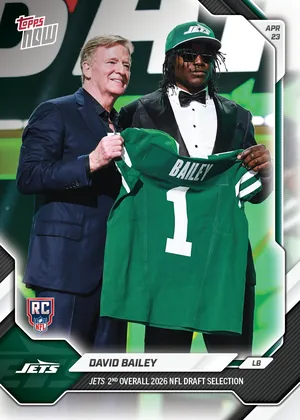
Bailey leads all rookies in sacks, tackles for loss, forced fumbles and pressures through eight games, and his five forced fumbles are tied for the NFL lead. On Nov. 8 he strip-sacked Patrick Mahomes twice on one drive.
7.5 now 15.0 at this pace Rookie record: 14.5, Jevon Kearse, 1999
Keep this rate over the Jets’ last eight games and he finishes with 15.0.
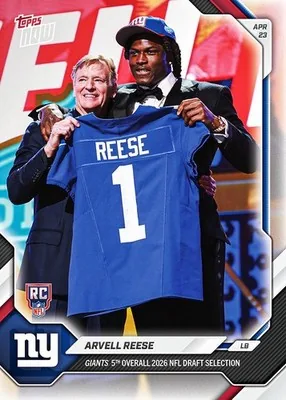
Per NFL.com, Reese is the only player in the league, rookie or not, with 65-plus tackles, eight-plus tackles for loss and an interception. At Philadelphia on Nov. 8 he had 12 tackles, three sacks and a forced fumble.
His closest comparison on this list is Micah Parsons, our first-team linebacker, who also played off the ball and rushed the passer.
How we ranked: Passing production and efficiency together, with rushing counted. Team record was a tiebreaker only.
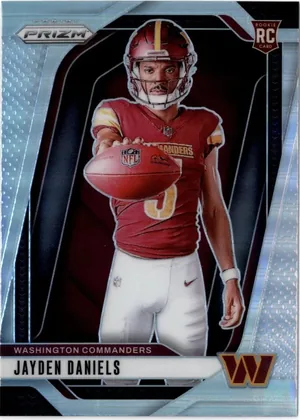
Daniels set the rookie record for completion percentage at 69.0 and broke Robert Griffin III’s rookie quarterback rushing record with 891 yards. He accounted for 31 touchdowns against nine interceptions and took a Washington team that went 4–13 the year before to 12–5 and the NFC Championship Game.
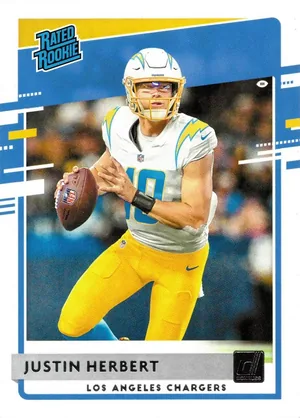
Herbert owns the rookie passing records that count: 31 touchdown passes, 36 total touchdowns, 396 completions and eight 300-yard games. He got the job in Week 2, when a team doctor punctured Tyrod Taylor’s lung before kickoff, and finished 38 yards short of Andrew Luck’s rookie yardage record in one fewer game. A 6–9 record in his starts is all that kept him off the top line.
| Player | G | Cmp % | Pass yds | Pass TD | INT | Rating | Rush yds | Total TD |
|---|---|---|---|---|---|---|---|---|
| First team: Jayden DanielsWAS ’24 | 17 | 69.0 | 3,568 | 25 | 9 | 100.1 | 891 | 31 |
| Second team: Justin HerbertLAC ’20 | 15 | 66.6 | 4,336 | 31 | 10 | 98.3 | 234 | 36 |
| Honorable mention: C.J. StroudHOU ’23 | 15 | 63.9 | 4,108 | 23 | 5 | 100.8 | 167 | 26 |
| Honorable mention: Dak PrescottDAL ’16 | 16 | 67.8 | 3,667 | 23 | 4 | 104.9 | 282 | 29 |
| Honorable mention: Robert Griffin IIIWAS ’12 | 15 | 65.6 | 3,200 | 20 | 5 | 102.4 | 815 | 27 |
| Honorable mention: Dan MarinoMIA ’83 | 11 | 58.4 | 2,210 | 20 | 6 | 96.0 | 45 | 22 |
Best in the group
C.J. Stroud
Led the NFL with 273.9 passing yards per game and the lowest interception rate (five in 499 attempts), then won the AFC South and a playoff game.
Dak Prescott
Rookie records for passer rating (104.9) and interception rate (four in 459 attempts), and a 13–3 record as the NFC’s top seed.
Robert Griffin III
3,200 passing yards, 815 rushing yards and a 102.4 rating, the rookie record until Prescott.
Dan Marino
Twenty touchdown passes against six interceptions and a 96.0 rating in nine starts, with a 7–2 record.
How we ranked: Yards and touchdowns from scrimmage, with return work credited for all-purpose backs.
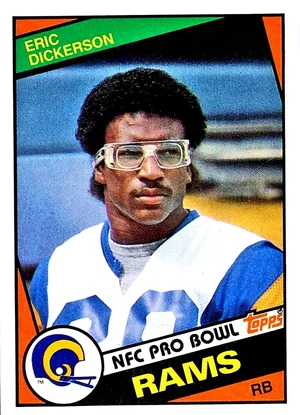
Forty-three seasons later, no rookie has run for more. Dickerson led the NFL with 390 carries and 1,808 yards, scored 18 rushing touchdowns, caught 51 passes and finished second in MVP voting. The Rams, 2–7 in 1982, made the playoffs.
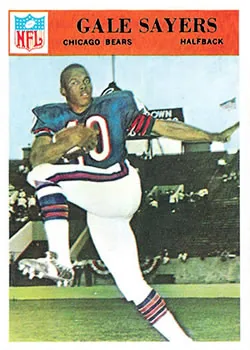
Sayers scored 22 touchdowns in a 14-game season, then an NFL record: 14 rushing, six receiving and one each on a punt and a kickoff. Six came in one muddy afternoon against the 49ers at Wrigley Field. His 2,272 all-purpose yards were the rookie record until 1988.
| Player | G | Rush yds | Yds/carry | Rush TD | Catches | Scrim. yds | Total TD |
|---|---|---|---|---|---|---|---|
| First team: Eric DickersonLAR ’83 | 16 | 1,808 | 4.6 | 18 | 51 | 2,212 | 20 |
| Second team: Gale SayersCHI ’65 | 14 | 867 | 5.2 | 14 | 29 | 1,374 | 22 |
| Honorable mention: Edgerrin JamesIND ’99 | 16 | 1,553 | 4.2 | 13 | 62 | 2,139 | 17 |
| Honorable mention: Saquon BarkleyNYG ’18 | 16 | 1,307 | 5.0 | 11 | 91 | 2,028 | 15 |
| Honorable mention: Ezekiel ElliottDAL ’16 | 15 | 1,631 | 5.1 | 15 | 32 | 1,994 | 16 |
| Honorable mention: Barry SandersDET ’89 | 15 | 1,470 | 5.3 | 14 | 24 | 1,752 | 14 |
| Honorable mention: Clinton PortisDEN ’02 | 16 | 1,508 | 5.5 | 15 | 33 | 1,872 | 17 |
Best in the group
Edgerrin James
Led the NFL with 1,553 rushing yards, caught 62 passes and was a first-team All-Pro.
Saquon Barkley
2,028 scrimmage yards and 91 catches, the most ever by a rookie running back.
Ezekiel Elliott
Led the NFL with 1,631 rushing yards in 15 games and was a first-team All-Pro.
Barry Sanders
1,470 yards at 5.3 a carry and 14 touchdowns, with only 13 starts.
Clinton Portis
1,508 yards at 5.5 a carry and 17 total touchdowns.
How we ranked: Yards, touchdowns and how much of each a receiver produced per game. Two make each team.
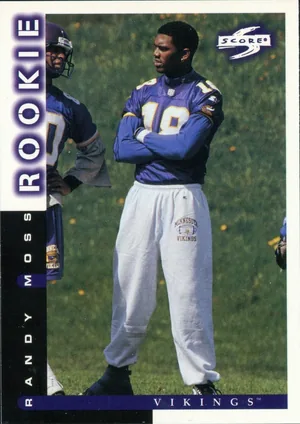
Moss caught 17 touchdown passes, still the rookie record, led the league in the category and averaged 19.0 yards a catch. The Vikings went 15–1 and scored 556 points, the most in NFL history at the time.
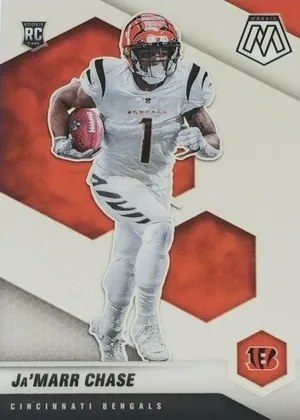
Chase’s 1,455 yards broke Justin Jefferson’s Super Bowl–era rookie record from a year earlier, and his 266-yard, three-touchdown game against Kansas City clinched the AFC North. He scored 13 times at 18.0 yards a catch, then helped Cincinnati reach the Super Bowl.
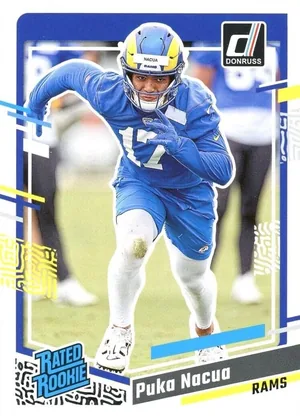
A fifth-round pick, Nacua set the rookie records for catches, passing Jaylen Waddle’s 104, and receiving yards, passing Bill Groman’s 1,473 from 1960. Then he caught nine passes for 181 yards in a playoff game at Detroit, another rookie record. He finished second to C.J. Stroud for Offensive Rookie of the Year.
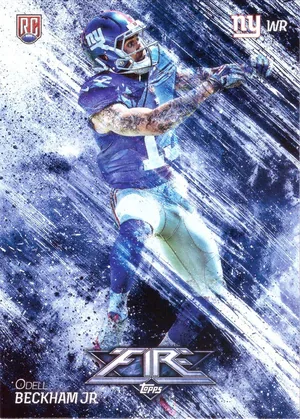
A hamstring injury kept Beckham out of the first four games. In the last 12 he caught 91 passes for 1,305 yards and 12 touchdowns, or 108.8 yards a game, the most of any receiver on this list, including the one-handed touchdown catch against Dallas on Sunday Night Football.
| Player | G | Catches | Rec yds | Yds/catch | Rec TD | Yds/game |
|---|---|---|---|---|---|---|
| First team: Randy MossMIN ’98 | 16 | 69 | 1,313 | 19.0 | 17 | 82.1 |
| First team: Ja’Marr ChaseCIN ’21 | 17 | 81 | 1,455 | 18.0 | 13 | 85.6 |
| Second team: Puka NacuaLAR ’23 | 17 | 105 | 1,486 | 14.2 | 6 | 87.4 |
| Second team: Odell Beckham Jr.NYG ’14 | 12 | 91 | 1,305 | 14.3 | 12 | 108.8 |
| Honorable mention: Justin JeffersonMIN ’20 | 16 | 88 | 1,400 | 15.9 | 7 | 87.5 |
| Honorable mention: Bill GromanHOU ’60 | 14 | 72 | 1,473 | 20.5 | 12 | 105.2 |
Best in the group
Justin Jefferson
1,400 yards, a Super Bowl–era rookie record until Chase broke it the next season.
Bill Groman
1,473 yards and 12 touchdowns at 20.5 a catch in the AFL’s first season. It was the rookie yardage record for 63 years.
How we ranked: Receiving production, per game and in the end zone. Blocking matters, but nobody has measured it the same way across eras.
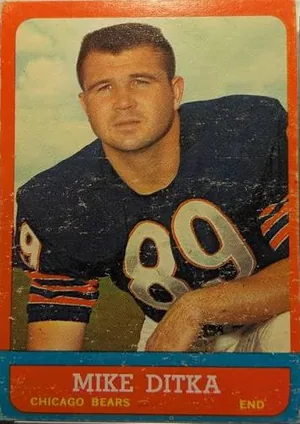
In a 14-game season Ditka caught 56 passes for 1,076 yards and 12 touchdowns, averaging 19.2 yards a catch. The yardage stood as the rookie record for tight ends for 63 years, until Bowers.
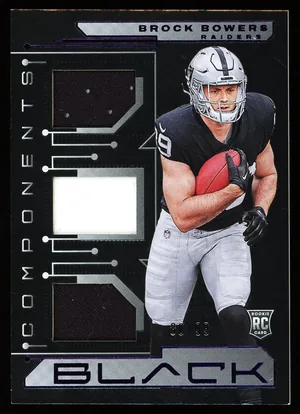
Bowers caught 112 passes, more than any rookie at any position, and his 1,194 yards broke Mike Ditka’s rookie tight end record from 1961. Both totals led every tight end in the league, veterans included.
| Player | G | Catches | Rec yds | Yds/catch | Rec TD |
|---|---|---|---|---|---|
| First team: Mike DitkaCHI ’61 | 14 | 56 | 1,076 | 19.2 | 12 |
| Second team: Brock BowersLV ’24 | 17 | 112 | 1,194 | 10.7 | 5 |
| Honorable mention: Sam LaPortaDET ’23 | 17 | 86 | 889 | 10.3 | 10 |
| Honorable mention: Keith JacksonPHI ’88 | 16 | 81 | 869 | 10.7 | 6 |
| Honorable mention: Kyle PittsATL ’21 | 17 | 68 | 1,026 | 15.1 | 1 |
| Honorable mention: Jeremy ShockeyNYG ’02 | 15 | 74 | 894 | 12.1 | 2 |
Best in the group
Sam LaPorta
86 catches, then the rookie tight end record, for 889 yards and 10 touchdowns. AP second-team All-Pro.
Keith Jackson
81 catches for 869 yards and a first-team All-Pro selection.
Kyle Pitts
1,026 yards, joining Ditka as the only rookie tight ends to reach 1,000 at the time.
Jeremy Shockey
74 catches for 894 yards and a Pro Bowl trip.
How we ranked: No box score here. We used All-Pro and Pro Bowl voting, Rookie of the Year votes and the tracked numbers that exist.
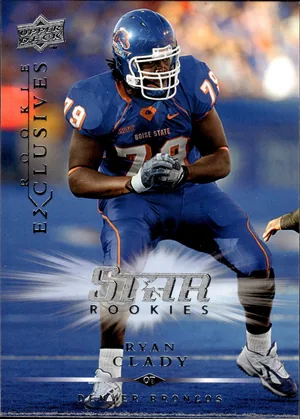
Clady started every game at left tackle and gave up half a sack all season, the only starting offensive lineman in the league under one. He was flagged three times, made the All-Pro second team and finished third in Offensive Rookie of the Year voting, the only lineman to get a vote.
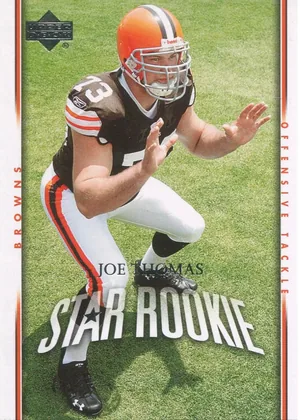
Thomas played every offensive snap for a Browns team that went 10–6, made the Pro Bowl and finished second to Adrian Peterson for Offensive Rookie of the Year, the only other player to get a vote. It was the start of a streak of 10,363 consecutive snaps.
Rashawn Slater
Pro Bowl starter and AP second-team All-Pro, with four sacks allowed in 1,116 snaps.
Jim Parker
First-team All-Pro as a rookie protecting Johnny Unitas, the first of nine straight first-team selections.
Tristan Wirfs
One sack allowed across 20 starts, playoffs included, for a Super Bowl champion.
How we ranked: Same rules as tackle: honors first, then the tracked numbers.
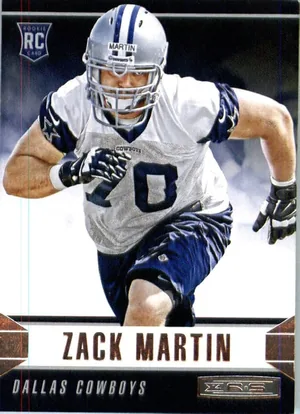
Martin was the only rookie on the 2014 AP All-Pro first team and the first rookie offensive lineman to make it since Dick Huffman in 1947. He started all 16 games at right guard, was credited with zero sacks allowed and opened the holes for DeMarco Murray’s NFL-leading 1,845 rushing yards.
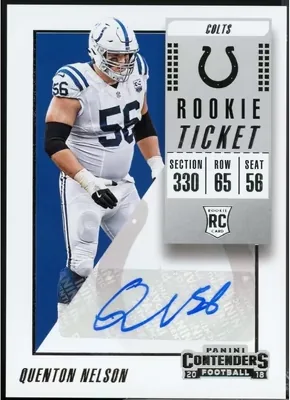
Nelson made the AP first team four years after Martin. He allowed two sacks on 730 pass-blocking snaps, both early in the season, and an Indianapolis line that gave up 56 sacks in 2017 allowed a league-low 18. He was also the first guard ever named Offensive Rookie of the Month.
Chris Hinton
Started the Pro Bowl as a rookie guard for a Colts team that went from winless to 7–9 and led the AFC in rushing.
Joel Bitonio
PFF’s first-team All-Pro left guard and its top-graded rookie lineman, one spot ahead of Martin.
How we ranked: Honors and PFF grades. Centers rarely show up in Rookie of the Year voting, so a vote counts for a lot.
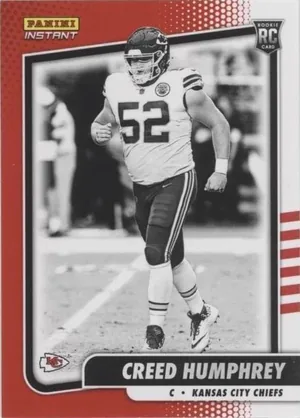
Pro Football Focus has graded every snap since 2006 and has never had a rookie offensive lineman grade higher. Humphrey’s 91.4 was 5.6 points clear of the next-best center in the league, and PFF’s wins-above-replacement model rated him the most valuable center in football.
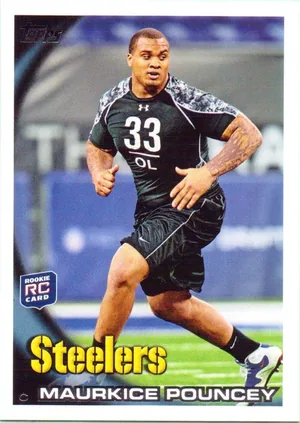
Pouncey won the starting job in his first training camp and kept it for 11 seasons. As a rookie he started all 16 games, made the Pro Bowl and the AP All-Pro second team and drew two Offensive Rookie of the Year votes, which almost never happens for a center. The Steelers reached the Super Bowl.
Nick Mangold
Allowed zero sacks and four total pressures, the best pass-blocking grade PFF has recorded for a center.
Jim Otto
First-team All-AFL in the league’s first season, the first of nine first-team selections.
How we ranked: Sacks first, then forced fumbles and what the pressure did to the scoreboard.
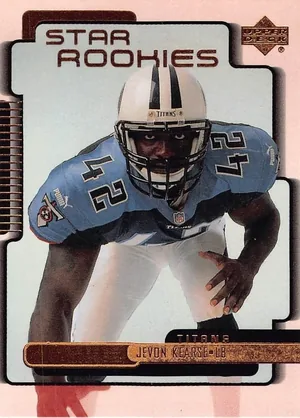
The Freak set the rookie sack record that still stands, forced eight fumbles and finished second in Defensive Player of the Year voting. He was the league’s defensive rookie of the month in every month but one, and the Titans rode him to Super Bowl XXXIV.
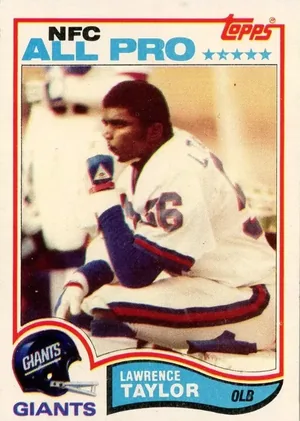
Taylor is the only player ever named Defensive Player of the Year as a rookie. His 9.5 sacks are unofficial because the league didn’t count sacks until 1982. The clearer number is what happened around him: the Giants allowed 425 points in 1980 and 257 in 1981, and went from 4–12 to the playoffs.
| Player | G | Sacks | Forced fumbles | Sacks/game |
|---|---|---|---|---|
| First team: Jevon KearseTEN ’99 | 16 | 14.5 | 8 | 0.91 |
| Second team: Lawrence TaylorNYG ’81 | 16 | 9.5* | — | 0.59* |
| Honorable mention: Aldon SmithSF ’11 | 16 | 14.0 | 2 | 0.88 |
| Honorable mention: Dwight FreeneyIND ’02 | 16 | 13.0 | 9 | 0.81 |
| Honorable mention: Julius PeppersCAR ’02 | 12 | 12.0 | 5 | 1.00 |
| Honorable mention: Leslie O’NealSD ’86 | 13 | 12.5 | 3 | 0.96 |
Best in the group · * unofficial (sacks became official in 1982) · — not recorded
Aldon Smith
14 sacks without starting a game, half a sack short of Kearse.
Dwight Freeney
13 sacks and nine forced fumbles, with only eight starts.
Julius Peppers
12 sacks and five forced fumbles in 12 games. Defensive Rookie of the Year.
Leslie O’Neal
12.5 sacks in 13 games, plus two interceptions and a pick-six. Defensive Rookie of the Year.
How we ranked: Sacks and tackles from the interior, then honors.
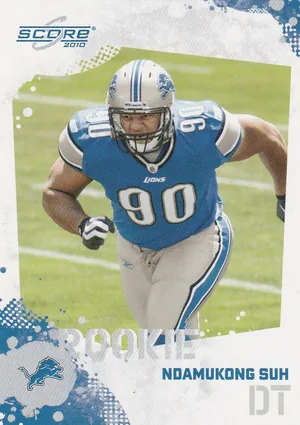
Suh led every defensive tackle and every rookie with 10 sacks, made 66 tackles, intercepted a pass and returned a fumble for a touchdown. He was a first-team All-Pro and the first Lions rookie voted a Pro Bowl starter since Barry Sanders.
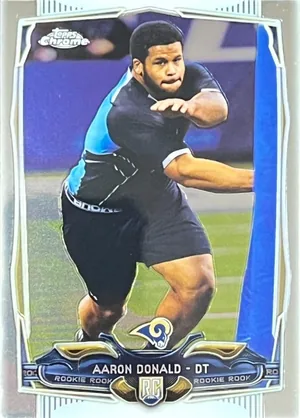
Donald started only 12 games and still produced nine sacks and 18 tackles for loss from the interior. It was the first season of a career that ended with three Defensive Player of the Year awards.
| Player | G | Sacks | Tackles |
|---|---|---|---|
| First team: Ndamukong SuhDET ’10 | 16 | 10.0 | 66 |
| Second team: Aaron DonaldSTL ’14 | 16 | 9.0 | 48 |
| Honorable mention: Kevin WilliamsMIN ’03 | 16 | 10.5 | 51 |
| Honorable mention: Dana StubblefieldSF ’93 | 16 | 10.5 | 64 |
| Honorable mention: Joe GreenePIT ’69 | 14 | — | — |
Best in the group · — not recorded
Kevin Williams
10.5 sacks and an interception, the start of five first-team All-Pro seasons.
Dana Stubblefield
10.5 sacks and Defensive Rookie of the Year.
Joe Greene
Defensive Rookie of the Year and a Pro Bowler on a 1–13 team.
How we ranked: Tackles, sacks and takeaways.
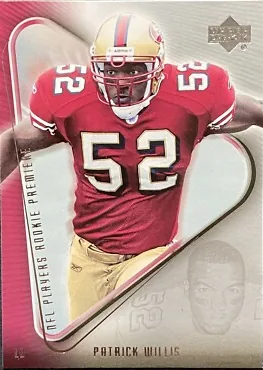
Willis led the NFL with 174 tackles and added four sacks and two forced fumbles. He was the only rookie on the AP All-Pro team, the only defensive rookie in the Pro Bowl and the Defensive Rookie of the Year.
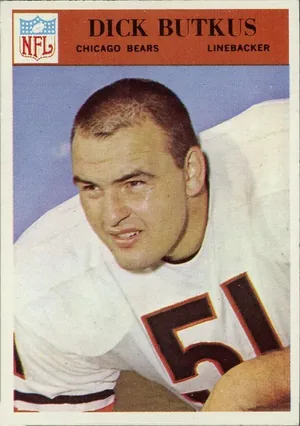
Butkus intercepted five passes and recovered seven fumbles, six of them the other team’s. Tackles weren’t an official stat yet, but the AP made him a first-team All-Pro, and it was the first of eight straight Pro Bowls. He finished third in the AP’s Rookie of the Year voting, which his teammate Gale Sayers won.
| Player | G | Tackles | Sacks | INT | Forced fumbles |
|---|---|---|---|---|---|
| First team: Patrick WillisSF ’07 | 16 | 174 | 4.0 | 0 | 2 |
| Second team: Dick ButkusCHI ’65 | 14 | — | — | 5 | — |
| Honorable mention: Luke KuechlyCAR ’12 | 16 | 164 | 1.0 | 2 | 0 |
| Honorable mention: Brian UrlacherCHI ’00 | 16 | 124 | 8.0 | 2 | 0 |
Best in the group · — not recorded
Luke Kuechly
Led the NFL with 164 tackles. Defensive Rookie of the Year.
Brian Urlacher
124 tackles and eight sacks. Defensive Rookie of the Year.
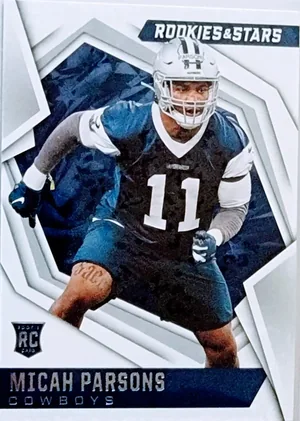
How we ranked: Tackles, sacks and takeaways. Parsons was a first-team All-Pro at linebacker and rushed from the edge.
Parsons was a first-team All-Pro linebacker who also rushed the passer like an elite edge: 13 sacks, 20 tackles for loss, 30 quarterback hits and the highest pass-rush grade PFF gave any defender that season (93.0). No rookie had finished as high as second in Defensive Player of the Year voting since Kearse.
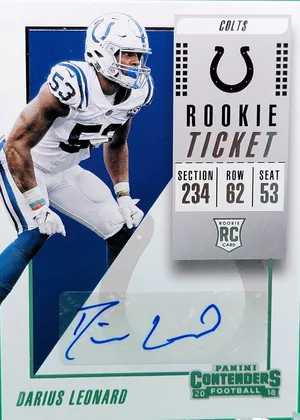
Then known as Darius, Leonard led the NFL with 163 tackles in 15 games and added seven sacks, four forced fumbles, two recoveries and two interceptions. He made the AP first team and was left off the Pro Bowl roster anyway.
| Player | G | Tackles | Sacks | Sacks/game |
|---|---|---|---|---|
| First team: Micah ParsonsDAL ’21 | 16 | 84 | 13.0 | 0.81 |
| Second team: Shaquille LeonardIND ’18 | 15 | 163 | 7.0 | 0.47 |
| Honorable mention: Von MillerDEN ’11 | 15 | 64 | 11.5 | 0.77 |
| Honorable mention: Shawne MerrimanSD ’05 | 15 | 57 | 10.0 | 0.67 |
Best in the group
Derrick Thomas
Ten sacks and 75 tackles. Defensive Rookie of the Year, and the first of nine straight Pro Bowls.
Von Miller
11.5 sacks and two forced fumbles in 15 games. Defensive Rookie of the Year and a Pro Bowl.
Shawne Merriman
Ten sacks, six of them in his first four starts after he joined the lineup in Week 7. Defensive Rookie of the Year and a Pro Bowl.
How we ranked: Interceptions and what came after them, plus passes defensed where they were tracked.
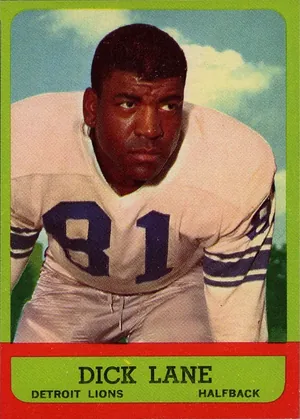
An Army veteran working at an aircraft plant, Lane walked into the Rams’ office with a scrapbook and asked for a tryout. Then he intercepted 14 passes in a 12-game season, including six in back-to-back December games. Seventy-four years later it is still the NFL single-season record, rookie or not.
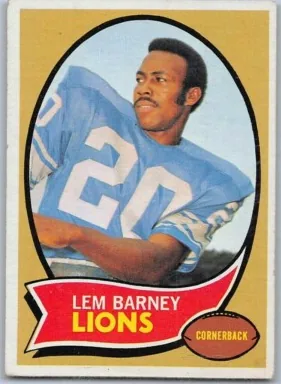
Barney intercepted 10 passes in 14 games and returned three for touchdowns, a rookie record he still shares. He was the first Defensive Rookie of the Year the AP ever named, at the start of an 11-season Hall of Fame career in Detroit.
| Player | G | INT | Return yds | INT TD | Passes defensed |
|---|---|---|---|---|---|
| First team: Night Train LaneLAR ’52 | 12 | 14 | 298 | 2 | — |
| Second team: Lem BarneyDET ’67 | 14 | 10 | 232 | 3 | — |
| Honorable mention: Everson WallsDAL ’81 | 16 | 11 | 133 | 0 | — |
| Honorable mention: Marcus PetersKC ’15 | 16 | 8 | 280 | 2 | 26 |
| Honorable mention: Ronnie LottSF ’81 | 16 | 7 | 117 | 3 | — |
| Honorable mention: Sauce GardnerNYJ ’22 | 17 | 2 | 19 | 0 | 20 |
Best in the group · — not recorded
Everson Walls
Undrafted, he led the NFL with 11 interceptions and made the Pro Bowl.
Marcus Peters
Led the NFL in interceptions (8, tied), passes defensed (26) and interception return yards (280). Defensive Rookie of the Year.
Ronnie Lott
Seven interceptions, three returned for touchdowns, as a first-team All-Pro corner on a Super Bowl champion.
Sauce Gardner
20 passes defensed and a first-team All-Pro selection. Defensive Rookie of the Year.
How we ranked: Takeaways first, then everything else a safety does.
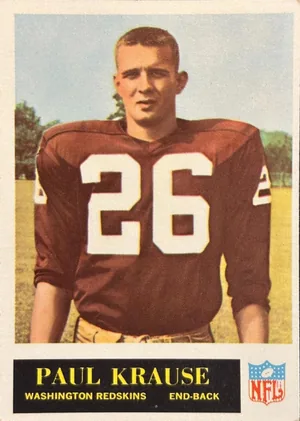
Krause led the NFL with 12 interceptions, picked off a pass in seven straight games and finished second to teammate Charley Taylor for Rookie of the Year. It was the first chapter of a career that produced the NFL record of 81 interceptions.
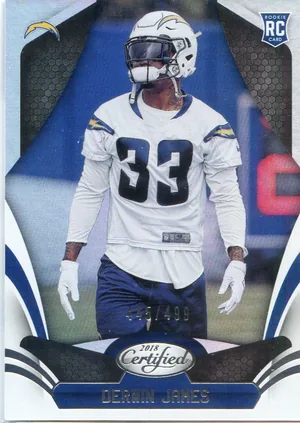
James lined up everywhere and filled every column: 105 tackles, 3.5 sacks, three interceptions and 13 passes defensed. He was a first-team All-Pro at safety and a second-team pick as a defensive back in the same season.
| Player | G | INT | Return yds | INT TD | Tackles |
|---|---|---|---|---|---|
| First team: Paul KrauseWAS ’64 | 14 | 12 | 140 | 1 | — |
| Second team: Derwin JamesLAC ’18 | 16 | 3 | 30 | 0 | 105 |
| Honorable mention: Austin GonsoulinDEN ’60 | 14 | 11 | — | — | — |
| Honorable mention: Mel RenfroDAL ’64 | 14 | 7 | 110 | 1 | — |
| Honorable mention: Ed ReedBAL ’02 | 16 | 5 | 167 | 0 | 85 |
Best in the group · — not recorded
Austin Gonsoulin
Led the AFL with 11 interceptions, four in one game, including the first interception in AFL history.
Mel Renfro
Seven interceptions at safety while leading the NFL in both punt and kickoff return yardage.
Ed Reed
Five interceptions for 167 return yards.
How we ranked: Return touchdowns first, then average and total yards.
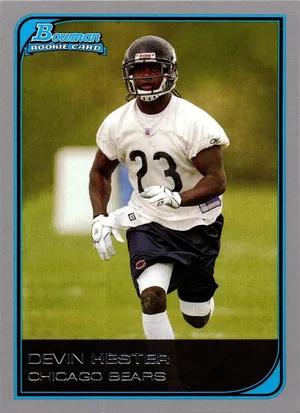
Hester scored six return touchdowns in his first 13 weeks: three on punts, two on kickoffs and one on a missed field goal he carried 108 yards, tying what was then the longest play in NFL history. Then he returned the opening kickoff of Super Bowl XLI for a touchdown.
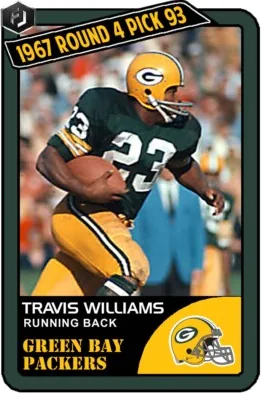
Williams returned 18 kickoffs and took four back for touchdowns, two of them in one quarter against Cleveland. His 41.1-yard average is still the NFL record, and his four touchdowns set the single-season mark. Lombardi’s Packers won Super Bowl II.
| Player | G | Return TD | KR avg | PR avg | Return yds |
|---|---|---|---|---|---|
| First team: Devin HesterCHI ’06 | 16 | 6 | 26.4 | 12.8 | 1,236 |
| Second team: Travis WilliamsGB ’67 | 14 | 4 | 41.1 | — | 739 |
| Honorable mention: Patrick PetersonARI ’11 | 16 | 4 | — | 15.9 | 699 |
| Honorable mention: Jack ChristiansenDET ’51 | 12 | 4 | 24.5 | 19.1 | 613 |
| Honorable mention: Chimere DikeTEN ’25 | 17 | 2 | 25.6 | 17.3 | 1,986 |
| Honorable mention: Cordarrelle PattersonMIN ’13 | 16 | 2 | 32.4 | — | 1,393 |
Best in the group · — not recorded
Patrick Peterson
Four punt-return touchdowns, tying the NFL record, including a 99-yard overtime winner against the Rams.
Jack Christiansen
Four punt-return touchdowns on only 18 returns.
Chimere Dike
2,427 all-purpose yards, breaking Tim Brown’s rookie record from 1988, and a first-team All-Pro selection.
Cordarrelle Patterson
Led the NFL at 32.4 yards per kickoff return, including a 109-yard touchdown that tied the record for the longest play in NFL history.
Both teams, position by position. Tap a name to jump back to the case for him.
Each block is one of the 30 seasons on the two teams, stacked by decade. The 2010s supplied the most, with 8. The 1970s placed nobody on either team.
